
If you’re planning to put up a new barn, shop, or storage building, you’re probably asking one big question: what should I be thinking about before I build it?
In Williams County, the answer usually starts with purpose. Storage for equipment? Livestock shelter? A shop that doubles as a workspace? The clearer you are about how the building will function day to day, the better the result.
Most property owners searching for Williams County garage hobby shop are not looking for something flashy. They want something that works. Strong posts. Straight walls. A roof that handles Ohio snow without worry. And a layout that makes daily work faster, not harder.
Let’s break down what actually matters before you break ground.
- Start With How You’ll Really Use It
- Snow Load And Wind Rating Aren’t Optional Here
- Pole Barns Remain a Practical Choice
- Think About Future Expansion Now
- Ventilation And Moisture Control Matter More Than People Expect
- Concrete work deserves attention
- Zoning and permits should never be skipped
- Work with builders who understand local conditions
- Cost questions come down to scope
Start With How You’ll Really Use It
Too many buildings are designed around what looks good on paper instead of what happens in real life.
Think about how equipment moves. How wide are your implements? Do you need drive-through access? Will trailers need room to turn? A few extra feet in width or height can make a major difference over the next 20 years.
Property owners comparing farm buildings in Williams County often focus on square footage. That’s part of it. But interior clearance, door placement, and floor thickness usually matter more.
If you plan to store grain trucks or tall equipment, standard sidewall heights may not be enough. If livestock is involved, airflow and layout shift the priorities entirely.
Snow Load And Wind Rating Aren’t Optional Here
Williams County weather has a way of testing buildings. Wet, heavy snow. Spring storms. Strong wind gusts across open ground.
Any structure labeled as one of the many Williams County agricultural buildings should be engineered to handle those conditions without question.
That means proper truss spacing. Correct post embedment depth. Bracing that doesn’t cut corners. It’s not just about code compliance. It’s about making sure you don’t have to think twice when the forecast turns rough.
Pole Barns Remain a Practical Choice
There’s a reason pole construction continues to dominate rural properties.
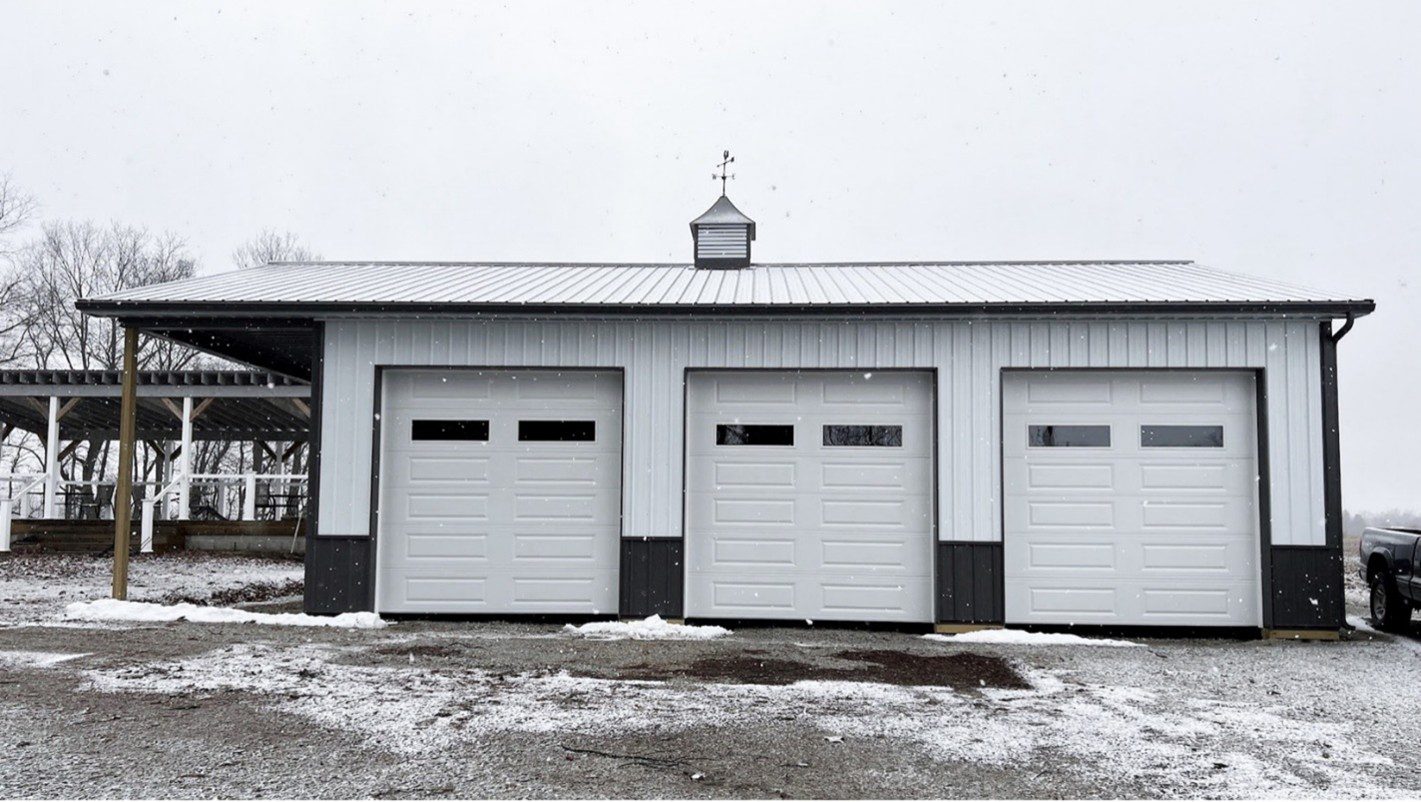
When people search for custom pole barns in Williams County, they’re usually looking for flexibility. Clear spans. Faster build timelines. Lower foundation costs compared to traditional stick framing.
Pole buildings also adapt well to future additions. Need to extend 20 feet in five years? That’s much simpler with post-frame construction.
That flexibility is one reason these buildings continue to show up across farms and acreages throughout the county.
Think About Future Expansion Now
You might not need extra space today. That doesn’t mean you won’t in five years.
A lot of landowners who build Williams County farm buildings start with storage in mind. Later, that same structure needs to handle workspace, tool storage, or additional equipment.
Planning ahead costs less than retrofitting later. Leave room on the site for expansion. Position doors so additions make sense. Consider running extra conduit before concrete is poured.
The small decisions made early often save frustration later.
Ventilation And Moisture Control Matter More Than People Expect
Condensation inside agricultural buildings causes more damage than most realize. Dripping ceilings. Rusted equipment. Mold in enclosed areas.
Insulation packages, ridge vents, and vapor barriers are not upgrades for comfort. They protect your investment.
If livestock is involved, air exchange becomes even more critical. Poor airflow affects animal health and productivity.
When reviewing plans for Williams County garage hobby shop, ventilation should be part of the core design, not an afterthought.
.
.
Concrete work deserves attention
The slab often gets less discussion than the walls and roof. That’s a mistake.
Thickness, reinforcement, and proper base preparation all matter. If you plan to park heavy equipment inside, 4 inches of concrete may not be enough. Adding thickness and reinforcement during the pour costs less than replacing cracked floors later.
Drainage around the building also plays a role. Water that sits against posts shortens the lifespan of the structure. Solid groundwork keeps the building performing the way it should.
Zoning and permits should never be skipped
Williams County has zoning rules that vary by township. Setback requirements. Height limits. Permit processes. Skipping that step slows everything down later.
Before finalizing plans for Williams County garage hobby shop, confirm requirements with the local township office. It saves time and avoids redesigns.
Work with builders who understand local conditions
Local soil types, frost depth, and weather patterns shape how buildings perform long term.
Builders familiar with Williams County Amish barns know what works here. They’ve seen what fails and what lasts. That experience matters more than the lowest price on paper.
If you’re evaluating options, ask how posts are treated. Ask about uplift protection. Ask about truss design. Straight answers usually reveal the difference between short-term savings and long-term durability.
Cost questions come down to scope
There is no universal price for Williams County garage hobby shop. Costs depend on size, materials, site prep, insulation, doors, and interior finish.
A basic equipment storage building looks very different from a fully enclosed shop with insulation and concrete.
Be clear about what you want from the start. It keeps bids realistic and avoids change orders halfway through the project.
Frequently Asked Questions
How long does it take to build Williams County garage hobby shop?
Most standard pole barns take a few weeks once materials are on site. Weather and size affect the timeline.
Do I need a concrete floor?
Not always. Some storage buildings use gravel. If you plan to use it as a shop or park heavy equipment inside, concrete is usually worth it.
Can I customize door placement and layout?
Yes. That’s one of the biggest advantages of post-frame construction. Layouts should match how you actually use the building.
Want us to build your next barn? Reach out to us online at MQS Structures, or call us at 855-677-3334.
We help farmers, families, and businesses build the space they need to grow. We listen first. Then we design a post frame building that’s built to last. No cookie-cutter plans. No hassle. Just quality structures that stand the test of time. We help farmers. We help families. We help businesses’ build the space they need to grow.
.
.
We listen. We design. We build structures.
We’re here to help you create a post frame building. One that’s built to last, and made for you.
Follow MQS Structures on Facebook and Instagram for a closer look at our MQS builds!