
Room for the next trip
RV & Boat Storage Building Planning Guide
An RV or boat storage building needs to do more than cover a vehicle. It should support arrival, parking, loading, routine checks, and departure without turning every trip into a rearranging project. This guide brings those decisions together so you can plan storage around the vehicle, trailer, property, and the way you travel.
Made for: RV, boat, camper, and trailer owners evaluating a dedicated storage building.
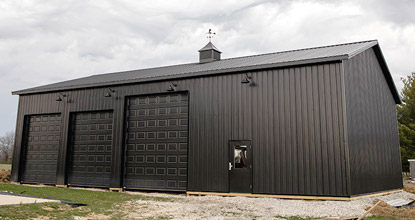
Start here. Start at the driveway and finish at the storage position. A usable route matters just as much as a large doorway.
01 / RV & BOAT STORAGEList the complete storage combination
Measure the whole combination you intend to store. A boat and trailer occupy more length than the boat alone, while an RV’s roof equipment, mirrors, or accessories may determine its widest or tallest point. Use the travel and storage configurations that apply to your vehicle. Manufacturer information can help, but verify the dimensions of the equipment you actually own and anything added since purchase.
Also decide what stays attached inside. You may want to leave a trailer connected for quick departures, or detach it to recover floor space. Those choices change the layout and the approach. Add room for travel supplies, tie downs, cleaning equipment, and seasonal accessories as separate storage needs rather than treating them as items that will somehow fit along the wall.
02 / RV & BOAT STORAGEWalk the route before selecting the doorway
Follow the path from the road through every gate, turn, slope, and narrow point to the proposed entrance. Consider where a tow vehicle will stand while you line up. Check whether another parked vehicle, a fence, or a landscaping feature would reduce maneuvering space on a normal day. Document the route with photos and a sketch to make the access conversation specific.
A doorway at the end of a long building may suit one property, while another arrangement makes sense on a different site. Do not choose a door position only because it looks good from the house. Review how the actual vehicle will approach and how the transition into the building affects clearance. The MQS building FAQs are a useful starting point for questions about door choices.
03 / RV & BOAT STORAGEPlan a parking envelope and a preparation zone
Draw the parked vehicle first, then add the space needed to reach storage compartments, check tires, connect or disconnect the trailer, and walk around it. Decide whether any slide outs or other movable components need to open inside. Communicate those activities clearly so the layout is evaluated for the intended use rather than simple vehicle storage alone.
Next, add a loading area. Bags, coolers, life jackets, tools, and trip supplies need a place while the vehicle is being prepared. A modest dedicated zone can prevent the driving path from becoming temporary storage. Our article on using a pole barn for RV storage introduces the value of a building designed for larger recreational equipment.
04 / RV & BOAT STORAGECompare enclosure choices with storage expectations
Think about what you want the building to provide: overhead cover, enclosed storage, a place for organized trip preparation, or a space you expect to use throughout the year. Each priority leads to different conversations about doors, walls, lighting, and interior finishes. State the desired outcome first, then ask which building configuration fits that use.
Avoid assuming that an enclosed building automatically delivers a controlled indoor climate. Temperature, moisture, and ventilation should be planned as their own systems. The same is true of security: select appropriate doors, hardware, lighting, and operating habits for your situation. Use the garage and hobby shop gallery for layout inspiration, while treating the photos as examples rather than standard packages.
05 / RV & BOAT STORAGEKeep water and moisture in the plan
Rain on the vehicle, wet gear, snow brought in on a trailer, and outdoor drainage can all affect storage conditions. Decide where wet items will go and how you will keep them from being stacked against walls or packed tightly around the vehicle. A clear floor and accessible perimeter make routine checks easier and help you notice a change in conditions.
Talk with the builder about the moisture control approach appropriate to the building’s enclosure and temperature plan. The MQS condensation article introduces several related topics. The actual assembly needs a coordinated design; a fan, a layer of insulation, or an enclosed shell should not be treated as a universal answer to every moisture problem.
06 / RV & BOAT STORAGEDescribe utility needs in plain language
Write down the tasks you want power or water to support. Examples include lighting a loading area, charging equipment, or using maintenance tools. Give the electrician and other appropriate contractors the actual equipment requirements and preferred use locations. A useful request explains the activity and the vehicle instead of simply asking for an outlet somewhere in the building.
Any planned wastewater handling, washing area, heating, or specialized connection needs its own review. These are scope decisions that should be assigned before the floor and interior are finalized. Keep the storage building’s purpose clear as well. A place to park and prepare a recreational vehicle should not quietly become a plan for occupied living space without the necessary design and local review.
07 / RV & BOAT STORAGEPlan seasonal access without blocking everyday use
Imagine returning from a trip when gear is wet and the storage shelves are already full. Where will you unload? Which door will you use when the large vehicle is parked? Can smaller equipment still leave the building? Answering those questions reveals whether the building needs separate access, better storage placement, or a different parking arrangement.
Long storage periods bring another set of routines. Keep the vehicle manufacturer’s storage and winterization instructions with your building plan, and provide access to the areas those tasks require. Building cover does not replace vehicle maintenance. The post frame building maintenance overview is a companion resource for caring for the structure itself.
08 / RV & BOAT STORAGECompare the whole project before choosing a size
Include the building, access work, floor, utilities, drainage, doors, and any desired interior finishes in the comparison. A smaller shell can stop looking economical if the entrance does not work or the vehicle requires repeated maneuvering. Conversely, extra space is useful only when it supports a real activity or a likely equipment change.
Prepare a short list of present needs and a separate list of possible upgrades. Bring vehicle measurements, driveway photos, preferred parking orientation, and loading requirements to MQS. Review the available exterior and design options after those fundamentals are clear. Appearance matters, but it is easier to choose confidently when the route, clearances, and storage routine already work.
09 / RV & BOAT STORAGETest a trip day and a storage day
Run two different scenarios through the plan. On a departure day, you may want supplies staged near the vehicle, room to connect the tow vehicle, and an unobstructed route out. During long term storage, you may want to use the surrounding room for smaller equipment while keeping inspection points accessible. A successful arrangement should support both without relying on a perfect temporary cleanup.
For a boat, include the trailer connection and the actual position of the motor and accessories. For an RV, consider the compartments you need during loading. If one layout works only when a particular item stays outside, make that assumption explicit. It is easier to decide whether it is acceptable now than discover it after the building is complete.
10 / RV & BOAT STORAGEDiscuss replacement vehicles without guessing
If a replacement RV or boat is a realistic possibility, collect information about the specific models or size range you are considering. Compare their complete storage dimensions with the current equipment. Ask whether the proposed doorway, interior layout, and property approach would still work. A different vehicle can change more than the length of the parking space.
Keep speculative purchases separate from established needs. Extra room may be worthwhile, but it should be tied to a reason you can explain. This also helps when considering a second bay or a future addition. The project team can evaluate a defined possibility more usefully than a general request to accommodate every recreational vehicle you might someday own.
11 / RV & BOAT STORAGEPrepare a storage building request that gets useful answers
Include the vehicle and trailer measurements, photos of the approach, how often you travel, and whether you want indoor loading or simple seasonal parking. Add the utility tasks and storage accessories that matter. Identify the clearances that cannot be compromised and the features you would like priced as alternatives.
Ask MQS which information needs to be confirmed before the building can be specified. If the approach, floor, or utilities are separately provided, put those items on the same project checklist. A clear request helps the discussion address the complete storage routine and gives you a better basis for comparing options than an exterior dimension alone.
| Routine | Space to consider | Question to answer |
|---|---|---|
| Arrival | Gate, turn, approach, and doorway | Can the complete combination enter? |
| Parking | Vehicle envelope and walking room | What must open or remain accessible? |
| Preparation | Supplies, loading, and connections | Where does gear go before a trip? |
| Return | Wet gear and unloading area | Can the driving route stay clear? |
| Seasonal storage | Inspection and service access | Can required checks happen in place? |
Your planning checklist
- Measure the RV or boat together with its trailer and accessories.
- Photograph each turn between the road and the entrance.
- Choose whether movable vehicle components must open indoors.
- Plan a place for loading supplies and drying wet gear.
- Provide actual equipment requirements to utility contractors.
Your next step
Plan storage around your vehicle
Send MQS your vehicle measurements and property details to begin a storage building conversation with the right information.