

Keep a useful building useful
Post Frame Building Seasonal Maintenance & Care Guide
Building care works best when it is regular, easy to repeat, and based on the actual structure. A short inspection routine helps you notice changes in doors, drainage, surfaces, and interior conditions before they disappear behind stored equipment. Use this guide to organize observations and plan the right follow up for your building.
Made for: Owners of post frame storage buildings, garages, workshops, and agricultural structures.
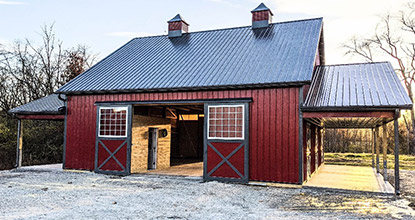
Start here. Record what changed, where it changed, and when you noticed it. Good observations make maintenance conversations much more useful.
01 / BUILDING CARECreate a starting record for your building
Gather the building plans, contract documents, product information, and any care instructions supplied with the project. Photograph the exterior, doors, interior, and drainage conditions when the building is in ordinary use. Include areas that may later be hidden by shelving or equipment. These records give you a reference when deciding whether a gap, stain, or alignment issue is new.
Keep the information in one place and make it available to anyone responsible for property care. Add the names of relevant installers and the model details for doors or other equipment. Our post frame maintenance overview introduces routine inspection topics. Product specific instructions and the actual condition of your building should guide the maintenance actions that follow.
02 / BUILDING CAREWalk the site before inspecting the walls
Begin outside the footprint. Look for new ponding, erosion, soil or mulch piled against the building, and changes in the way water moves across the approach. Consider whether a new driveway surface, landscaping project, or nearby stored material has altered drainage. The building may be unchanged while the surrounding property begins directing water toward it.
Check where downspouts discharge and whether the route remains open. Observe gutters and roof edges from a safe ground level position where possible. If an area needs closer inspection, arrange appropriate professional access instead of treating the roof as a walking surface. The site preparation article provides useful background for understanding why the surrounding grade matters after construction as well as before it.
03 / BUILDING CAREObserve siding, trim, and roof related changes
Look for impact damage, displaced trim, visible corrosion, staining, or a new opening at a connection. Record the location with a photo wide enough to show where it is on the building, then add a closer image if it can be obtained safely. Note whether the issue followed a storm, equipment contact, or another event. That context helps distinguish a symptom from its possible cause.
Avoid turning a visual inspection into unplanned structural work. Fasteners, panels, and flashing have specific installation details, and a change may indicate something beyond the visible component. Ask the appropriate installer or professional how to proceed. MQS’s introductory maintenance tips are a companion checklist; they should be read alongside the care instructions for the products on your building.
04 / BUILDING CAREKeep door operation on the routine checklist
Watch and listen while doors operate normally. Note binding, scraping, new noise, changes in alignment, or difficulty closing. Keep the travel area free of stored objects and inspect accessible seals or weather related details as appropriate. A door that has become harder to use deserves attention before force becomes part of the daily routine.
Follow the door manufacturer’s care instructions and use the proper service provider for adjustments and repairs. Springs, tracks, operators, and large moving panels are not interchangeable maintenance items. If a door’s behavior changes, record what it does and when it began. Our door and window planning resource helps explain how opening choices relate to the building’s use.
05 / BUILDING CARECheck the interior before reorganizing storage
Walk through the room looking for new water marks, damp materials, pest activity, unusual odors, floor changes, and obstructions around entry routes. Move accessible stored items as needed to see areas that tend to be hidden, while avoiding unsafe handling. A regular storage reset is a convenient time to check the building rather than simply shifting the same boxes back into place.
Note whether the building’s use has changed. More wet equipment, a new heating pattern, or a later interior enclosure can affect conditions. The MQS condensation overview introduces moisture related questions, but a persistent wet area needs evaluation of the actual source. Do not cover the symptom with a finish or tightly packed storage before understanding it.
06 / BUILDING CAREUse seasonal transitions as reminders
At a change of season, review the tasks relevant to how you use the property. Before frequent travel or field work, focus on equipment access and doors. After leaves fall, observe drainage paths and accessible roof water components. Before storing seasonal equipment, make room for the checks you will need to perform while it remains parked. The useful routine follows your building’s activity, not a generic calendar alone.
Weather and location affect which tasks matter most. Use the product instructions, your own observations, and professional advice to set the appropriate frequency. Also revisit the building after a significant storm or known impact when it is safe to do so. A seasonal reminder helps maintain consistency, but it should not delay follow up when a new problem is already visible.
07 / BUILDING CAREClean in a way that fits the materials
Choose cleaning methods using the instructions for the actual exterior coating, interior lining, floor finish, and installed equipment. Do not assume that the strongest cleaner or highest water pressure is the best option. Protect electrical equipment and stored materials, and avoid directing water into openings or assemblies that are not intended to be washed that way.
If the coating or finish is unknown, identify it or ask for guidance before treating the entire surface. Cleaning is also an opportunity to observe damage that dirt had concealed. Keep photos of areas that may need follow up and note what was used. The MQS options page illustrates the variety of finishes a building may have, which is one reason a single cleaning recipe is not appropriate for every project.
08 / BUILDING CARESeparate routine care from changes to the building
Adding an opening, hanging equipment, changing a ceiling, or converting storage to occupied use is a design question rather than ordinary cleaning or care. Bring the original information and proposed change to the appropriate project professionals. Do not assume a building component can carry a new load simply because there is open space above it.
Keep a maintenance log with the date, observation, photo reference, action taken, and person responsible. Save service records and any updated product instructions. Review the MQS construction details for background, and use the actual building documents when discussing a change. A clear record makes it easier to explain the structure to a contractor, a future caretaker, or a new owner.
09 / BUILDING CAREMake a simple observation log
A useful entry might read: water noticed near the north entrance after afternoon rain; two photos attached; stored equipment moved clear; contractor contacted for evaluation. That description separates observation from diagnosis and records the next action. It is more useful later than a note that says only to fix the leak.
Keep unresolved items visible until the follow up is complete. Add the date of the service visit, what was done, and any instructions supplied afterward. If the condition returns, the record helps explain what has already been checked. A basic spreadsheet, notebook, or shared folder is enough as long as the information remains organized and accessible.
10 / BUILDING CAREMake responsibility clear when several people use the building
If family members, employees, or caretakers share the property, decide who records concerns and who arranges follow up. Encourage people to report a door that has changed operation, a known equipment impact, or water noticed during bad weather. Small observations can be lost when everyone assumes someone else has already mentioned them.
Keep the routine easy to perform. A short list covering access, drainage, visible changes, and interior conditions is more likely to be used than a complicated form. Add equipment specific checks only where the manufacturer’s instructions or the building’s use call for them. The person observing a concern does not need to diagnose it before recording it.
11 / BUILDING CAREReview the record before selling or changing the property
A building care folder can help explain what is installed, which services have been performed, and which alterations have occurred. Include updated drawings or professional documentation when available. Avoid representing an unverified change as approved simply because it has been in place for years. Keep the records factual and identify anything that still needs review.
When the building’s use changes, start a new planning conversation using that folder. More frequent occupancy, different equipment, or a new interior layout may introduce needs that the original project did not address. The care history provides context, while the proposed use determines what the appropriate professionals should evaluate next.
| Area | What to observe | What to record |
|---|---|---|
| Site and drainage | Ponding, erosion, or changed runoff | Weather, location, and photos |
| Exterior | New dents, stains, gaps, or displaced parts | What changed and any known event |
| Doors | Operation, alignment, and clear travel area | Symptoms and service follow up |
| Interior | Moisture, blocked routes, or hidden damage | Use changes and affected materials |
| Building changes | New openings, loads, or occupied areas | Professional review and updated documents |
Your planning checklist
- Keep plans, care instructions, and service contacts together.
- Photograph changes before describing them to a contractor.
- Include drainage and door operation in routine observations.
- Use product specific cleaning and maintenance instructions.
- Review proposed alterations before changing the building.
Your next step
Planning a new building or a different use?
Share the intended project with MQS and ask which building details should be discussed before the work begins.